
By Josh Fuller · September 18, 2026 · EV Chargers
Can You Put an EV Charger on a 100 Amp Panel?
The short answer: Often, yes. A 100 amp panel can take a Level 2 EV charger when a load calculation shows room for it, and a home with gas heat, a gas range, and a gas water heater usually has that room for a 40 amp circuit. An all-electric home usually does not, and the choices there are a load management device that throttles the charger, or a 200 amp service upgrade. The calculation, not the panel's amperage, decides it.
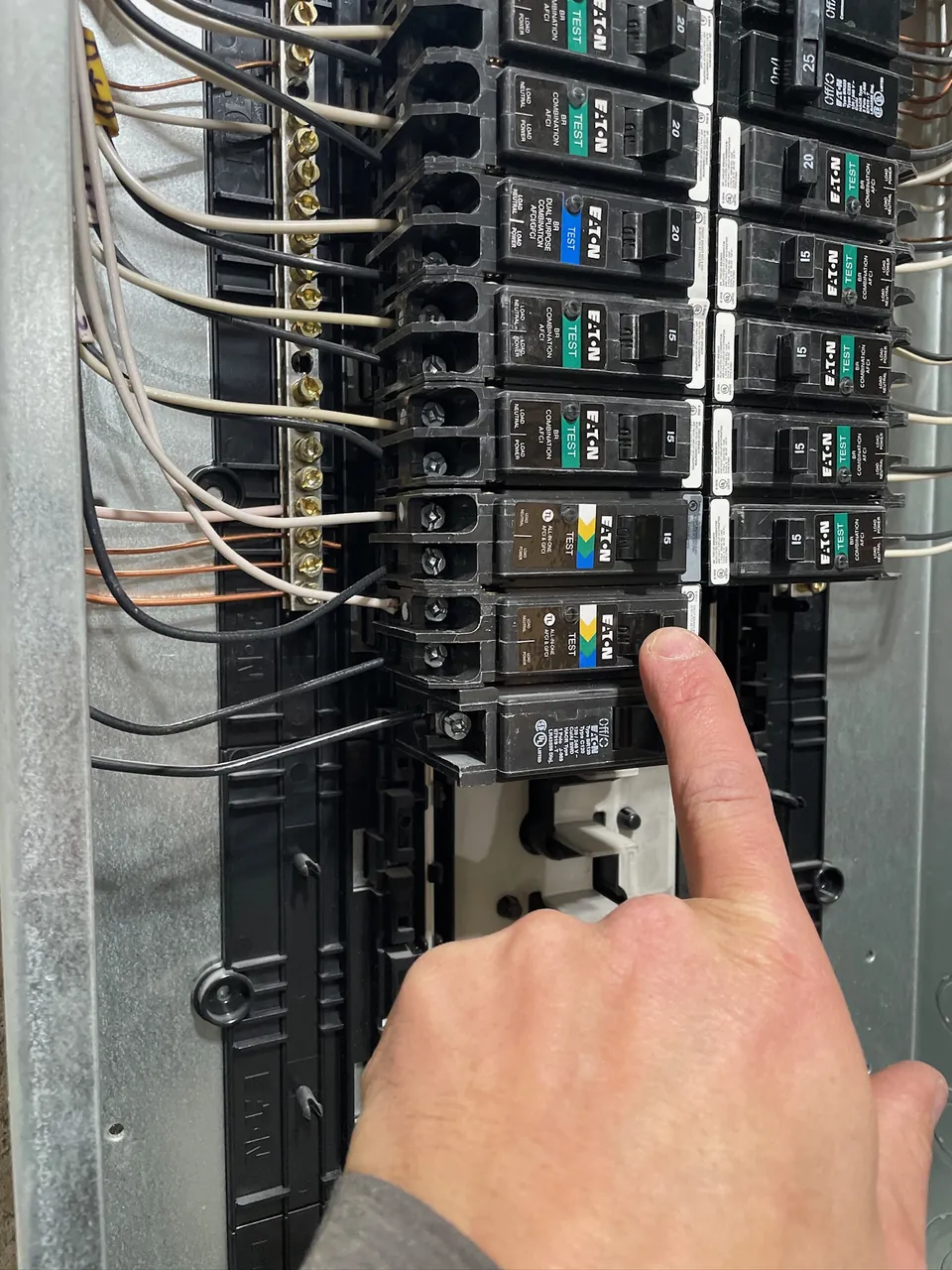
The short answer: Often, yes. A 100 amp panel can take a Level 2 EV charger when a load calculation shows room for it, and a home with gas heat, a gas range, and a gas water heater usually has that room for a 40 amp circuit. An all-electric home usually does not, and the choices there are a load management device that throttles the charger, or a 200 amp service upgrade. The calculation, not the panel’s amperage, decides it.
The load calculation decides it
“100 amps” is the rating of the main breaker and the service conductors. It says nothing about how much of that capacity is already spoken for. The NEC has a method for existing homes that adds up what is there: the general lighting and receptacle load by square footage, the fixed appliances (range, dryer, water heater, dishwasher, disposal), the air conditioning or heat at full value, and then the new load being added. Part of the total is counted at 100 percent and the rest at 40 percent, because not everything runs at once. The result is compared with the service size.
An EV charger counts as a continuous load, so it goes in at 125 percent of its charging current. A charger set to 32 amps is counted as 40. That is the same reason a 32 amp charger sits on a 40 amp breaker.
A hypothetical to show the shape of it
Take an 1,800 square foot home with gas heat, a gas range, a gas water heater, a 30 amp air conditioner, and an electric dryer. The general and appliance loads are modest, the air conditioner is the largest single item, and the calculation comes out with room for a 40 amp EV circuit on a 100 amp service. Change the range, water heater, and furnace to electric and the same house is at or over 100 amps before the charger is added. That is the whole difference, and it is why we ask for a photo of the panel directory before quoting: the directory tells us what is electric.
40, 48, or 60 amps: what the numbers mean
Chargers and circuits are described by different numbers and it causes confusion.
- 40 amp breaker, 32 amp charging. The most common install on a 100 amp panel. About 7.7 kilowatts at 240 volts. For most commutes, this refills the car overnight with hours to spare.
- 50 amp breaker, 40 amp charging. The size of a 14-50 receptacle, the plug-in option. A plug-in charger cannot draw more than 40 amps under the code, so this is the ceiling for a cord-connected unit.
- 60 amp breaker, 48 amp charging. About 11.5 kilowatts. This requires a hardwired charger, since the code does not allow a plug-in unit at 48 amps. It is the top rating for most residential chargers and it is what people mean when they say the fastest home charger.
On a 100 amp service, 48 amps is a stretch without load management, and a 60 amp breaker is more than half the panel’s rating on one circuit. On a 200 amp service it is routine. Most of the difference in daily use is small: the car is full by morning either way. The 48 amp option matters if you drive a lot in a day, have two EVs sharing one charger, or want to charge in a short off-peak window.
Load management: the middle option
The NEC allows an electric vehicle energy management system, which is a device or a charger feature that limits how much the charger can draw based on what the rest of the house is doing. When the load calculation is used with one of these, the charger is counted at its limited setting rather than its maximum.
There are two common forms. One is a charger with a built-in current-limit setting that we fix at install time, say 24 or 32 amps, and it never draws more. The other is dynamic: a current sensor on the service conductors watches the total draw, and the charger throttles down when the air conditioner and dryer are running and back up when they stop. A third version, a branch-circuit sharing device, lets an EV charger share an existing 240 volt circuit with a dryer or a range, and only one can run at a time.
These devices are what make an EV work on a 100 amp panel in a house that would otherwise fail the calculation. They also cost less than a service upgrade and involve no APS coordination. The trade-off is that charging slows when the house is busy, which for overnight charging rarely matters.
When the honest answer is a 200 amp upgrade
There are cases where we would rather do the panel upgrade than fit a charger around a 100 amp service.
The house is all-electric and you want a second large load, such as a hot tub or a shop, in the next couple of years. Load management can carry one EV, but it does not create capacity for everything else.
The panel is a Federal Pacific or Zinsco, or it is a 1970s or 1980s load center with no open spaces. Adding a 40 or 60 amp breaker to a panel that should already be replaced is a bad place to spend money.
Two EVs. One charger on load management is workable. Two chargers on a 100 amp service usually is not.
In Prescott Valley this comes up less than you might expect. About 55 percent of the town’s homes were built since 2000, and most of those came with 200 amp service, so the EV job in StoneRidge, Granville, or Pronghorn Ranch is usually a straightforward 60 amp circuit. The 100 amp question is more common in the 44 percent built between 1970 and 1999. Our Prescott Valley service page has more on the housing there.
Chino Valley is a different pattern. The acreage lots in places like Appaloosa Meadows and Wineglass Acres often have a well pump, a shop, and sometimes a barn on the same service, and those loads eat into a 100 amp panel fast. We run the calculation with all of it included, and the Chino Valley page covers what is typical there.
Rebates and rate plans
Do not count on a rebate to decide the job, but check. APS has offered rebates on qualifying Level 2 smart chargers through its Marketplace; the current terms and eligible models are on the APS site and change over time. APS also offers off-peak charging rate plans, and a charger with scheduling makes it easy to charge only in the cheap window, which is where the real saving is over the life of the car.
Permits and inspections
An EV circuit is permitted work in every jurisdiction we serve. In Prescott Valley it goes through Development Services at 7501 E Skoog Blvd, with inspections requested up to five days ahead and a 6:30 a.m. cutoff for same-day. Chino Valley’s Development Services at 1982 Voss Dr works under the 2023 NEC and offers next-business-day inspections when requested before midnight. The load calculation goes in the permit file, which is a good reason to have it done properly rather than guessed at. Our EV charger installation page walks through the full process.
To find out what your panel can take, text us photos of the open panel with the directory visible and the meter, tell us the car and where you want the charger, and we will send back a written estimate.
Want us to look at your panel?
Text photos of the open panel and the meter. Written quote within one business day, permit included.
Related questionsStraight answers
Can a 100 amp panel handle a Level 2 charger?
Usually, if a load calculation shows room. A home with gas heat, gas range, and gas water heater typically has capacity for a 40 amp EV circuit on 100 amp service. An all-electric home usually does not, and the options there are a load management device that limits the charger or a 200 amp service upgrade.
What size breaker does an EV charger need?
A 40 amp breaker for a charger set to 32 amps, a 50 amp breaker for a 40 amp plug-in unit on a 14-50 receptacle, and a 60 amp breaker for a 48 amp hardwired charger. The breaker is 125 percent of the charging current because charging is a continuous load. Wire size follows the breaker.
What is a load management device for an EV charger?
It is a charger setting or separate device that limits how much current the charger draws, fixed at install or dynamically from a sensor on the service conductors. The NEC lets the charger count at its limited value in the load calculation, which is what allows a 100 amp panel to host a charger it otherwise could not.
Is there a rebate for installing an EV charger in Arizona?
APS has offered rebates on qualifying Level 2 smart chargers through its Marketplace, with eligibility checked on the equipment, and it offers off-peak EV charging rate plans. Terms change, so check the APS site before you buy the charger. We do not build any rebate into a quote and we do not promise one.
Should I upgrade to 200 amps before adding an EV charger?
Upgrade first if the home is all-electric, if a second EV, hot tub, or shop is coming, or if the panel is a Federal Pacific, Zinsco, or a full 1970s load center. If the house has gas appliances and a sound panel, a 40 amp circuit or a load-managed charger on the existing 100 amp service is the sensible route.